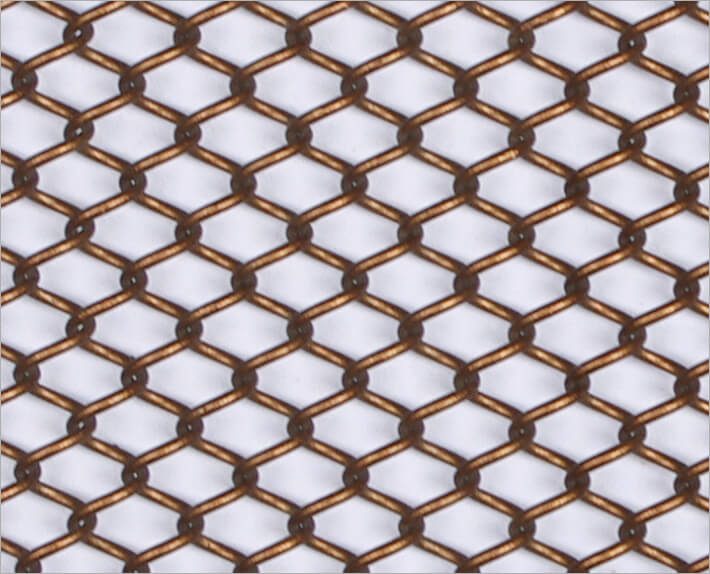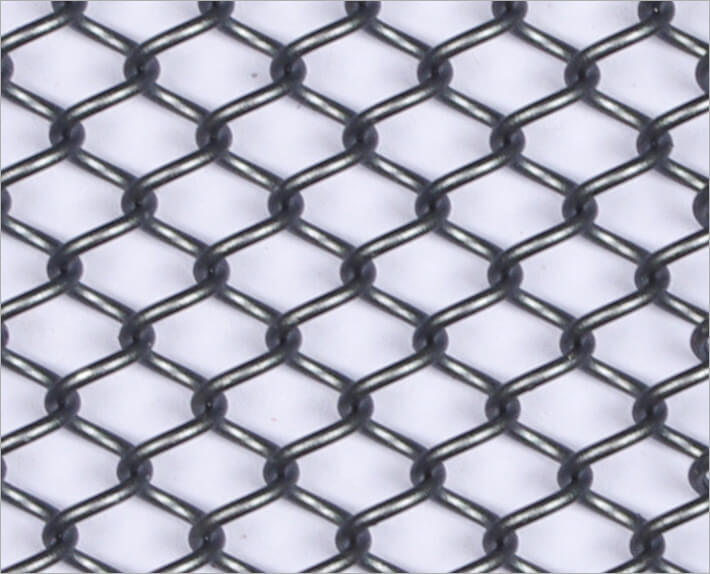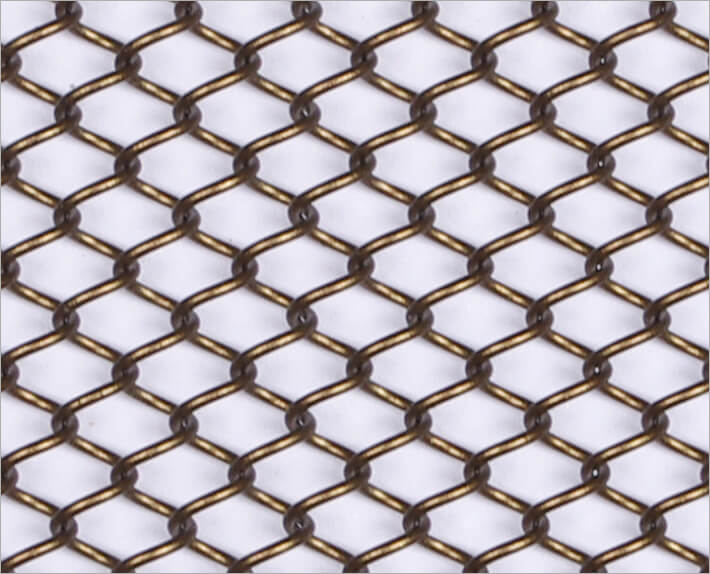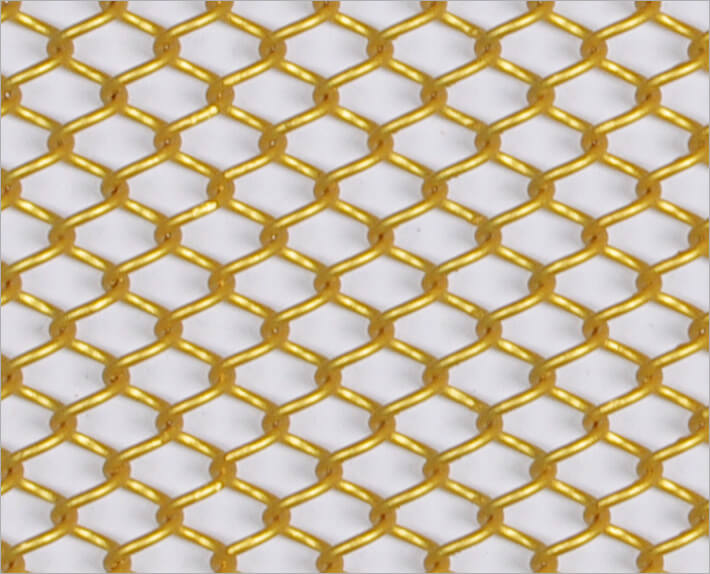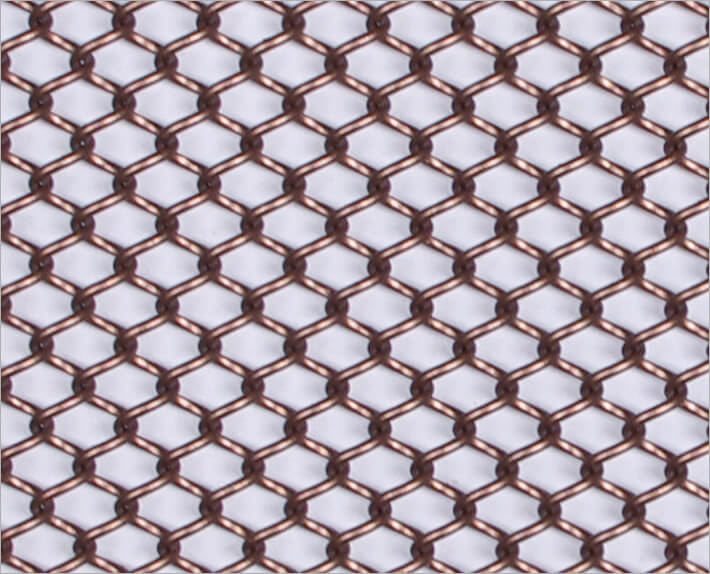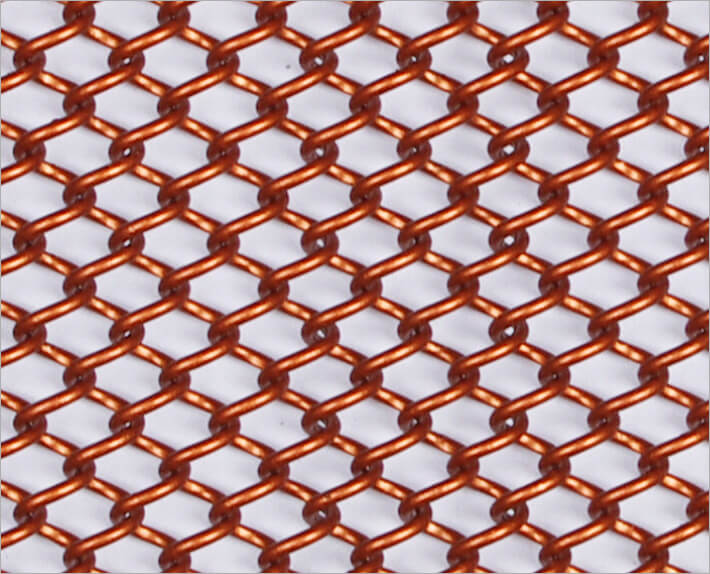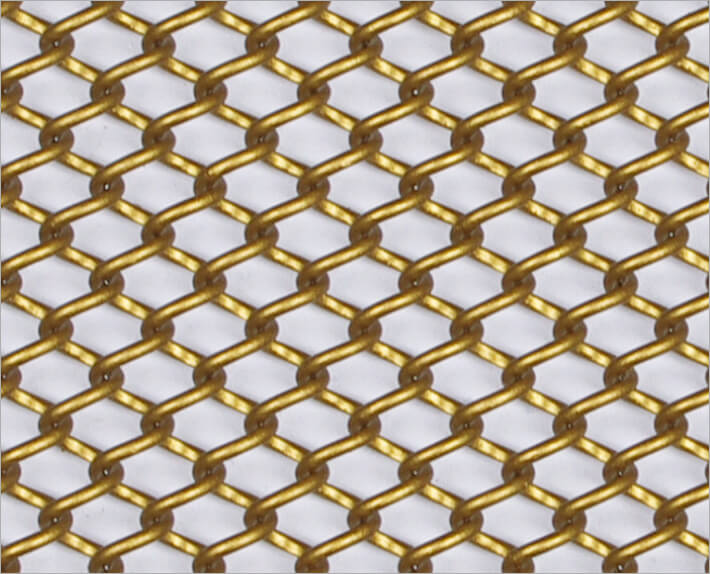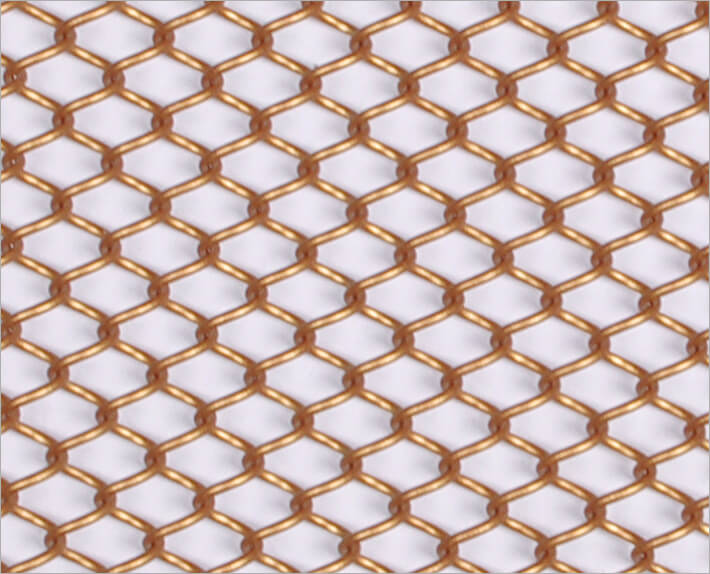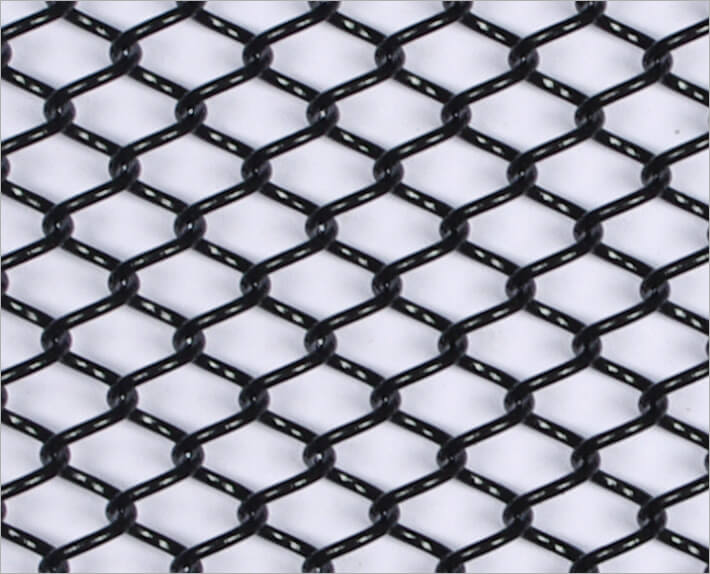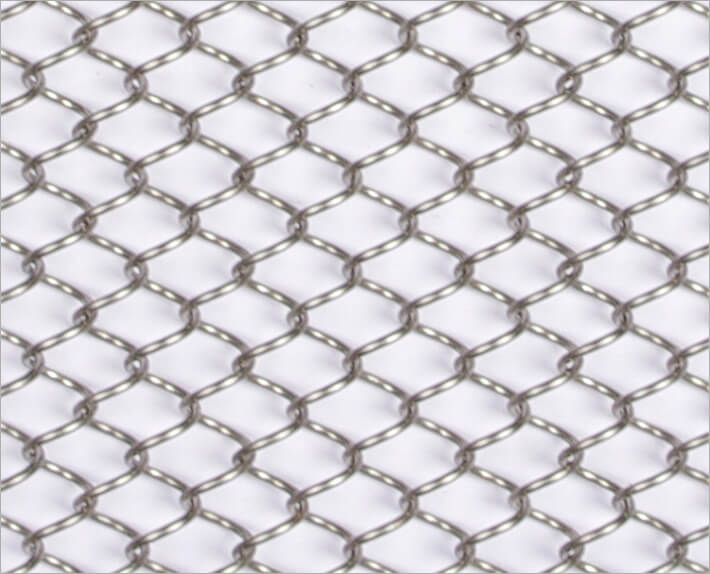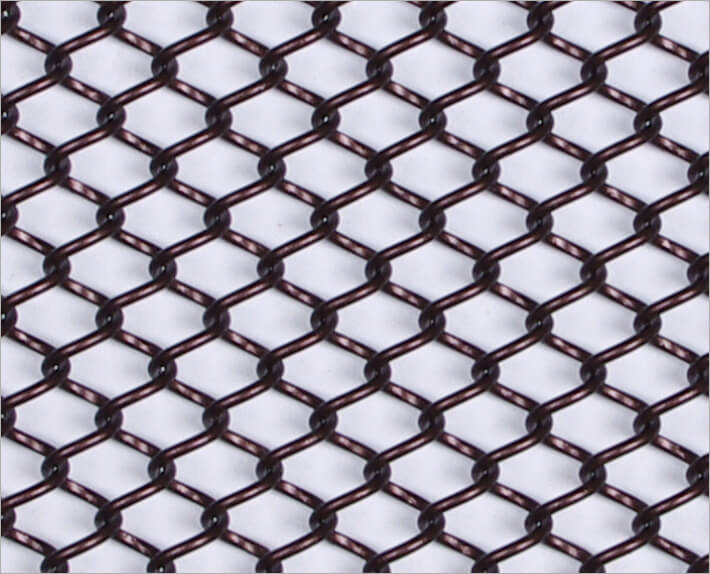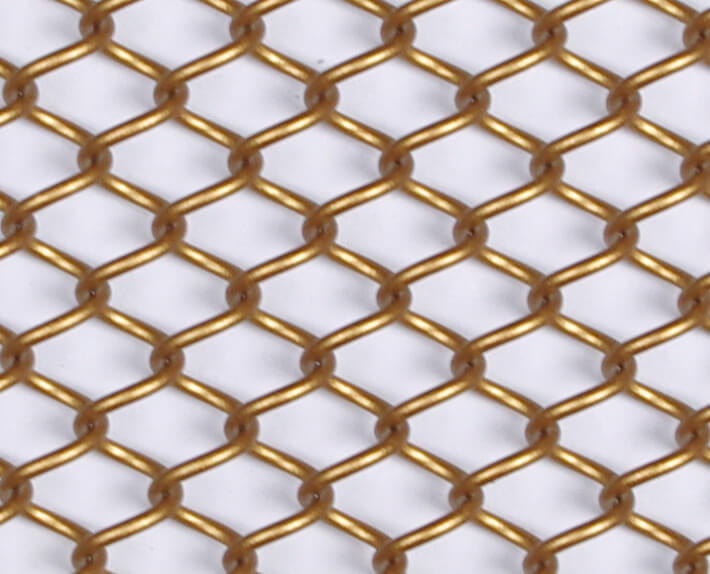
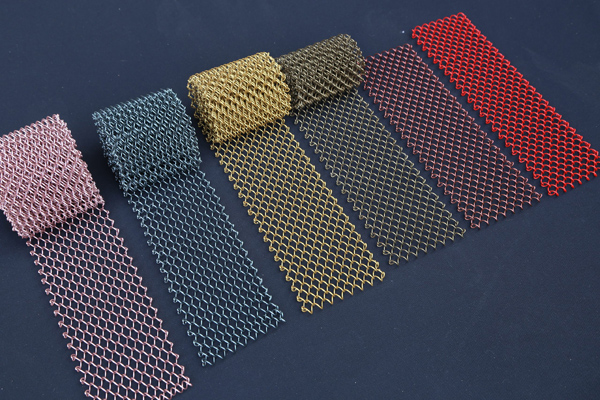
Metal coil drapery is a decorative metal curtain made from interlinked wire coils hung vertically from a track or a rail. The coils are joined into one continuous, flexible sheet, so the curtain folds, slides and re-hangs like a textile while remaining metal — it does not fray, stretch or hold odor, and there is no fabric content to ignite. Gecho Metal Fabrics manufactures coil drapery to order in magnesium alloy, aluminum, stainless steel 304 and 316, brass and copper, made to the width and drop of your opening, for ceilings, partitions, window treatments and feature walls.
What is metal coil drapery?
Also called a coil mesh curtain, a metal chain curtain or coil curtain mesh, coil drapery is specified wherever a space needs to be divided or softened without being closed off. Because the curtain is built from individual wire spirals rather than a woven cloth, daylight passes through the open area between the links. A coil curtain therefore reads as a translucent screen from one side and as a textured, light-catching surface from the other.
Unlike a rigid mesh panel, coil drapery moves. The links let the fabric gather, follow a curve, and sway slightly with air movement. That is why it is often chosen for double-height lobbies, restaurant dining rooms and retail interiors, where a fixed screen would look heavy and close the plan down.
How coil drapery is made
Coil drapery starts as metal wire wound into a spiral. The spirals are then interlinked, one through the next, to form a continuous sheet. There are no welds at the joints — the fabric holds together because of the geometry of the coil, not because it is bonded — and that is what gives the curtain its movement. The links rotate slightly against each other, so the sheet can fold, give a little in service, and return to shape.
Three variables set how the finished curtain looks:
- Wire diameter — how fine or heavy each strand reads.
- Aperture — the size of the opening between links, which controls transparency.
- Pitch — how closely the coils are packed, which controls density.
Gecho’s standard coil drapery uses 1.2 mm wire with an 8.5 mm (1/4 in) aperture and a 7.1 mm fabric thickness, weighing approximately 2.0 kg/m². Finer and heavier link sizes are produced to order.

Key features and benefits
- Daylight without losing the space behind. The open area between the coils cuts glare and screens what is behind the curtain while still letting light through, so a room stays bright without being overlooked.
- Movement as a design element. Each link turns as air moves through the curtain, so the surface shifts between reflective and transparent over the course of a day, and reads differently from every angle.
- Division without walls. A coil curtain separates two zones while keeping sightlines, daylight and airflow between them — useful in open-plan restaurants, offices and retail floors where a solid partition would deaden the plan.
- Metal throughout. There is no fabric, foam or adhesive in the curtain, so there is nothing to ignite, fray, sag permanently or hold cooking and tobacco odor.
- Light on structure. At approximately 2.0 kg/m² the curtain can usually be hung from a slim top track or a suspended ceiling, without the structural fixing a glass or stone screen would need.
- Low maintenance. Dust with a soft brush or a vacuum brush attachment, or wipe with a damp cloth. Unlike textile drapes the curtain does not need laundering, dry cleaning or re-proofing.
- Made to the opening. Curtains are produced to the finished width and drop you specify — width is customized, not limited to a standard panel size — with the track and fixings matched to the curtain weight.
Coil drapery vs woven wire drapery
Both are metal fabrics hung to fall like a textile, and Gecho makes both, but they are built differently and they look different in a room.
| Coil drapery | Woven wire drapery | |
|---|---|---|
| Construction | Wire wound into spirals and interlinked; no welds | Wire woven on a loom in warp and weft |
| Surface | Rounded and three-dimensional; the depth of the coil catches light | Flat; the weave pattern reads clearly from a distance |
| How it hangs | Folds and gathers; follows curves, columns and radiused tracks | Falls in straighter, more regular pleats |
| Transparency | Set by link size and pitch — from sheer to dense | Set by the open area of the weave |
| Typical weight | approx. 2.0 kg/m² at 1.2 mm wire / 8.5 mm aperture | Varies with the weave; confirmed per specification |
| Usually specified for | Feature ceilings, soft room division, window treatment, retail interiors | Facade screens, wall covering, flatter decorative panels |
Choose coil drapery when the curtain should feel soft, deep and in motion. Choose woven wire drapery when a flatter face and a legible weave pattern matter more than movement.
Materials and finishes
Coil drapery is made to order, so the material is chosen around the exposure and the look rather than picked from a stock list.
| Material | Character | Where it is specified |
|---|---|---|
| Magnesium alloy (MGO) | The lightest option; even, consistent color | Large ceiling rafts and tall drops where weight matters |
| Aluminum | Light and corrosion resistant; takes anodizing and powder coating well | Interior partitions, window treatment, colored schemes |
| Stainless steel 304 | Strong and corrosion resistant; natural metal finish | General interior and semi-exterior work |
| Stainless steel 316 | The most corrosion resistant of the stainless grades | Wet rooms, coastal and marine-adjacent projects |
| Brass | Warm gold tone that deepens with age | Hospitality and retail interiors |
| Copper | Reddish tone that develops a living patina | Feature walls and art-directed interiors |
Standard finishes are mill (natural), chrome, brushed nickel, antique bronze and colored PVD. Aluminum can also be anodized or powder coated to a color reference. Tell us the lighting conditions and the exposure — interior, wet area or exterior — and we will confirm which finish suits the specification, and supply a sample of the link style and finish before production.
Specifications
| Parameter | Value |
|---|---|
| Material | Magnesium alloy, aluminum, stainless steel 304 and 316, brass, copper |
| Wire diameter | 1.2 mm standard; finer and heavier wire to order |
| Aperture | 8.5 mm (1/4 in) standard; other link sizes to order |
| Fabric thickness | 7.1 mm |
| Weight | approx. 2.0 kg/m² |
| Width | Made to your opening width; customized, not limited to a standard panel size |
| Drop | Made to the finished drop of the opening |
| Standard finish | Mill, chrome, brushed nickel, antique bronze, colored PVD |
| Mounting | Ceiling track, rail, hooks, or a purpose-made frame |
| Minimum order | 10 m² |
| Lead time | One week for stock specifications; other specifications by negotiation |
Values shown are for Gecho’s standard coil drapery. Link size, wire diameter, material and finish can all be varied, and the weight changes with them; we confirm the final figures against your specification before production.
How coil drapery is installed
A coil curtain hangs from a track or a rail fixed to the ceiling or to a structural beam. Straight tracks suit standard openings; curved tracks follow a radiused ceiling, a bay or a column. For a ceiling raft the fabric is hung between two parallel tracks, so the curtain hangs clear of the slab and reads as a floating plane.
To quote and manufacture a curtain we need two dimensions:
- Finished width — the width of the opening, or the length of the track, measured at the fixing point.
- Finished drop — measured from the underside of the track or ceiling fixing point down to where the bottom of the curtain should sit.
Allow a little headroom above the track for the hooks and for the curtain to run, and tell us what you are fixing into — concrete, steelwork or a suspended ceiling grid — so the fixing can be matched to it. At approximately 2.0 kg/m² the load is light, but the fixing still has to suit the substrate.
Gecho supplies the curtain together with the hardware matched to its weight. Send a drawing or the ceiling detail and we will confirm the track type, the fixing method and the number of drops. See metal mesh installation details and our interior mesh curtain specification guidance.
Where coil drapery is used
Ceilings and ceiling rafts
Hung as a raft or a full ceiling canopy, coil drapery hides services and softens a large slab while still letting light down into the room. See metal mesh ceilings and metal mesh ceiling panels.
Partitions and room division
A coil curtain divides a dining room, an office floor or a showroom without closing it, and can be pulled back when the space needs to be open. See metal mesh partitions, metal partition and metal fabric dividers.
Window treatment and light control
Used in place of a fabric blind, coil drapery cuts glare and gives daytime privacy while keeping the window open to light. See metal window treatment.
Hospitality and retail interiors
Restaurants, hotels and stores use coil drapery for booth screening, VIP areas and display backdrops because it withstands daily contact and can be wiped down. See the Haagen-Dazs store mesh curtain and the Beijing CNE partitions.
Feature walls, headboards and backdrops
Hung flat against a wall or used as a decorative headboard, the coil texture adds depth without the weight of a solid panel.
Wet areas and shower screens
In stainless steel 316 the curtain can be used where a textile would stay damp. See metal shower curtains.
Fire performance, cleaning and maintenance
Coil drapery contains no textile, foam or adhesive — the whole curtain is metal — so unlike a fabric drape there is no fuel load in the curtain itself. Where a project requires a documented classification, tell us the standard that applies and we will confirm what test documentation is available for that specification.
Cleaning is dry and simple:
- Dust periodically with a soft brush or a vacuum fitted with a brush attachment, working down the curtain.
- Wipe with a damp cloth and a mild neutral detergent for fingerprints and marks.
- Avoid abrasive pads and aggressive cleaners, which can dull a brushed, anodized or PVD finish.
- In coastal or wet-area installations, rinse and dry the curtain more often to keep salts off the surface.
Ordering, samples and lead times
- Send the opening. Give the finished width, the finished drop, and the ceiling or fixing detail — a sketch or drawing is enough.
- Choose the look. Tell us the material, the link size and the finish, or describe the effect you want and we will recommend a specification.
- Check a sample. We supply a sample of the link style and finish so you can see it in the actual lighting before production.
- Confirm the specification. We confirm the final weight, the number of drops, the track and the hardware against your dimensions.
- Manufacture and ship. One week for stock specifications; other specifications by negotiation. Minimum order 10 m².
Ready to specify? Contact us for samples, technical data and project-specific pricing.
Project references
- Haagen-Dazs store mesh curtain — coil drapery for a retail interior
- Beijing CNE partitions — interior metal mesh partitions
- Hong Kong Time partitions — retail mesh partitions
- Ningbo villa ceiling — residential ceiling mesh
- Wanda Plaza facade — metal mesh facade for a commercial plaza
- BMW Center partitions — mesh partitions for an automotive showroom
Frequently asked questions
What is a metal coil drapery made of?
Coil drapery is a curtain formed from interlinked metal coils or rings rather than woven wire. Gecho produces it in magnesium alloy, aluminum, stainless steel and brass, so the curtain can be specified around a light, medium or heavy look.
How much does coil drapery weigh?
Our standard coil drapery measures approximately 2.0 kg/m², which is light enough to hang from a suspended ceiling or a slim top track without a heavy structural fixing. Exact weight depends on the wire diameter and the density of the links.
Can the links be made larger or smaller?
Yes. Link size and density are the two variables that control how the curtain reads. Small, closely linked coils give a fine rain-like texture; larger flat links give a bolder, more open pattern. Both are made to order.
How is the curtain fixed in place?
Coil drapery is normally hung from a simple top track, from ceiling hooks, or from a custom-designed framework. Tell us the opening or the ceiling detail and we will confirm the fixing method and the hardware needed.
Where is coil drapery usually specified?
Feature partitions in hotel lobbies and restaurants, retail display backdrops, room dividers, sliding-door alternatives, decorative headboards, ceiling canopies, entrance features and exhibition walls. It divides a space while keeping light and air moving through it.
Do you supply samples and made-to-size curtains?
Yes. We produce the curtain to your opening width and drop, and we can supply a sample of the link style and finish before production so you can check the appearance in the actual lighting.
What is the maximum width of a coil drapery curtain?
Width is made to order rather than limited to a standard panel size, so the curtain is produced to the width of your opening. Very wide openings are normally hung as two or more drops side by side on the same track, which keeps each drop manageable to handle and to install. The drop is made to the finished height of the opening.
What is the minimum order and the lead time?
The minimum order is 10 m². Lead time is one week for stock specifications; other specifications are quoted by negotiation once the material, link size and finish are confirmed.
Is coil drapery suitable for outdoor use?
Coil drapery is primarily an interior product. Where a curtain is exposed to weather, specify stainless steel 316 or aluminum and confirm the finish with us first. For fully exterior screens, exterior curtain wall and exterior cladding are the appropriate systems.
How do you clean metal coil drapery?
Dust it with a soft brush or a vacuum brush attachment, and wipe it with a damp cloth and a mild neutral detergent. Avoid abrasive pads and aggressive cleaners on brushed, anodized or PVD finishes.
Add movement, luxury, and innovative design to your next project. Contact us for samples, technical specifications, and project-specific solutions.