
Introduction
When a visitor walks up to a primate enclosure at a modern zoo, the last thing they want to see is a wall of heavy chain-link blocking the view. Today’s wildlife parks demand enclosures that are safe for animals, secure for keepers, and almost invisible to guests.
That’s exactly why stainless steel wire rope mesh — widely known in the trade as zoo mesh — has become the go-to material for animal containment projects worldwide.
Whether you’re designing a new tiger habitat, retrofitting a historic aviary, or sourcing materials for an aquarium tunnel, this guide covers everything you need: material grades, mesh specifications, animal-specific recommendations, installation tips, and how to evaluate suppliers.
What Is Stainless Steel Wire Rope Mesh?
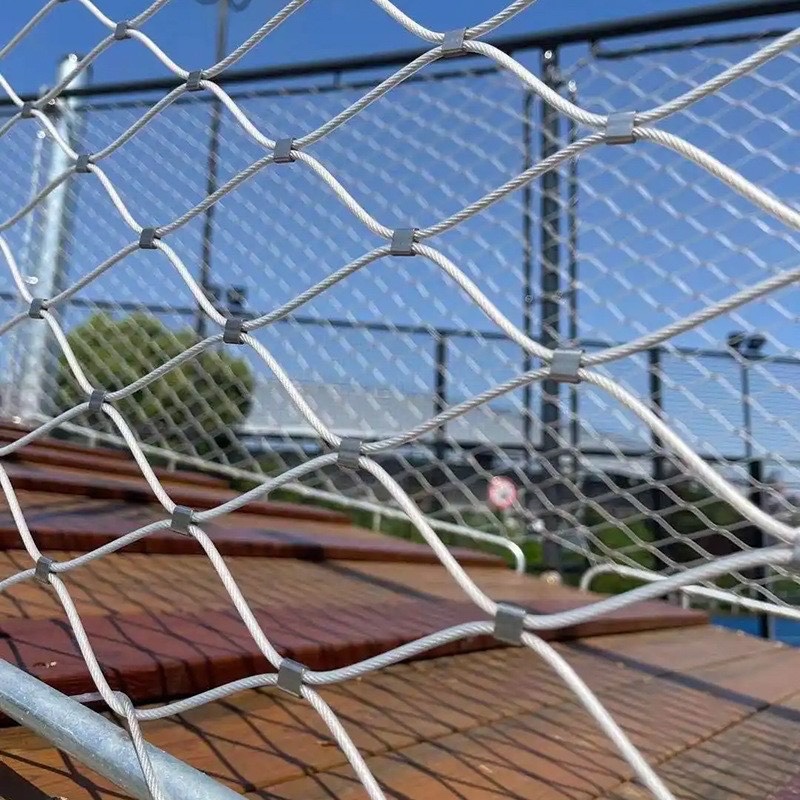
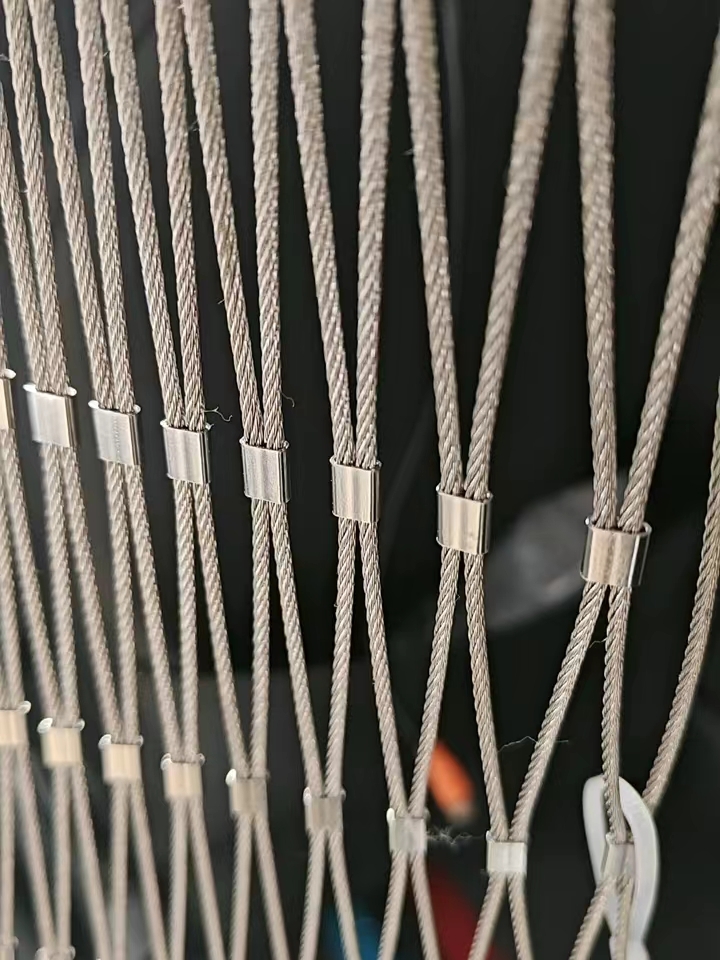
Stainless steel wire rope mesh is a flexible netting system made by interlocking individual stainless steel wire ropes through either ferrule sleeves (ferrule-type mesh) or crimped knots (knotted-type mesh). The result is a high-tensile yet pliable sheet that combines strength with remarkable transparency.
Common Material Grades
- AISI 304 — General-purpose stainless steel. Suitable for most indoor and mild outdoor environments. Good corrosion resistance, cost-effective.
- AISI 316 — Marine-grade stainless steel. Contains molybdenum for superior resistance to chloride corrosion. Ideal for coastal zoos, humid climates, and aquarium applications.
- AISI 316L — Low-carbon variant of 316. Excellent for welded structures and highly corrosive environments.
Two Main Structural Types
| Type | Structure | Best For |
|---|---|---|
| Ferrule Mesh | Wire ropes crossed and fixed with stainless ferrules | Standard enclosures, balustrades, green walls |
| Knotted / Interlocked Mesh | Ropes mechanically interlocked without ferrules | Heavy-duty zoo cages, large predator enclosures |
Why Is It Called “Zoo Mesh”?
The term “zoo mesh” emerged because stainless steel wire rope mesh has become the dominant choice for animal enclosures in modern zoological gardens. The reasons are both practical and well-documented:
In short, “zoo mesh” is not a different product — it’s the same stainless steel wire rope mesh, configured and marketed specifically for zoological applications.
Key Specifications to Understand
When sourcing zoo mesh, four specifications matter most:
1. Wire Rope Diameter
- 1.0–1.5 mm — Small birds, decorative partitions, aviaries for finches and parakeets
- 2.0 mm — Medium birds (parrots, peacocks), small primates (lemurs, marmosets)
- 2.4–3.0 mm — Medium primates (macaques, gibbons), small cats
- 3.0–4.0 mm — Big cats (lions, tigers, leopards), bears, large apes
- 4.0 mm+ — Heavy-duty predator enclosures, grizzly bears, polar bears
2. Mesh Opening Size
- 20 × 20 mm — Small birds, insect barriers
- 25 × 25 mm to 38 × 38 mm — General primate mesh
- 50 × 50 mm to 60 × 60 mm — Big cats, large primates
- 80 × 80 mm to 100 × 100 mm — Very large animals where transparency is the priority
- 150 × 150 mm+ — Decorative, architectural, large ungulates
3. Mesh Orientation
- Vertical × Horizontal (90°) — Most common; balanced load distribution.
- Vertical × Vertical (60° or custom angle) — Used where one direction of tension dominates.
4. Material & Finish
- SS304 for general use; SS316 / 316L for marine or acidic environments.
- Optional black oxide or anti-glare coatings for visitor-facing displays.
Applications by Animal Type
Primates (Monkeys, Apes, Lemurs)
A wire diameter of 2.0–3.0 mm with mesh opening 25 × 25 mm to 38 × 38 mm is standard. Tension firmly enough to prevent primates from gripping, but flexibly enough to avoid injury from falls.
Big Cats (Lions, Tigers, Leopards)
For maximum security, specify 3.0–4.0 mm SS316 wire rope with 50 × 50 mm opening. The knotted construction provides superior bite resistance.
Aviaries & Bird Enclosures
Lightweight 1.5–2.0 mm mesh with 20 × 20 mm to 25 × 25 mm openings prevents even small birds from escaping while preserving flight-friendly visibility.
Bears
Heavier 3.0–4.0 mm wire with 60 × 60 mm opening is recommended, paired with reinforced frame structures to absorb impact loads.
Ungulates & Hoofed Animals
Larger openings (up to 100 mm) are acceptable since these animals don’t grip mesh. Visual transparency is the priority.
Benefits Over Traditional Fencing Materials
| Feature | Wire Rope Mesh | Chain Link | Welded Wire Mesh |
|---|---|---|---|
| Transparency | Excellent | Poor | Fair |
| Animal Safety | High | Low (sharp ends) | Medium |
| Lifespan | 20–30+ years | 10–15 years | 8–12 years |
| Corrosion Resistance | Excellent (SS) | Low unless coated | Medium |
| Aesthetic Appeal | Premium | Industrial | Industrial |
| Custom Shapes | Easy | Difficult | Limited |
| Maintenance | Low | Medium | Medium |
The longer lifespan and lower maintenance often make stainless steel wire rope mesh more cost-effective over a 20-year lifecycle, despite a higher upfront investment.
Installation Best Practices
Common Mistakes to Avoid
- Choosing 304 instead of 316 for coastal zoos — Chloride corrosion can cause stress cracking in as little as 5 years.
- Under-specifying wire diameter — A 2.0 mm mesh will not contain an adult tiger. Always err on the side of over-specification.
- Confusing ferrule and knotted types — They look similar but perform very differently under load.
- Skipping factory load testing — Request a sample or test report before placing bulk orders.
Frequently Asked Questions
Q1: How long does stainless steel zoo mesh last? A: SS316 mesh in a typical outdoor environment lasts 25–30+ years. SS304 typically lasts 15–20 years.
Q2: Can zoo mesh be custom-shaped? A: Yes. The mesh can be fabricated to fit curves, domes, cylinders, and irregular frames — including full aviary tunnels.
Q3: Is the mesh safe for animal paws and claws? A: Yes. The wire surface is smooth, with no sharp cut edges, and the flexible structure reduces impact trauma.
Q4: What’s the lead time for custom orders? A: Standard specifications typically ship in 7–15 days. Custom dimensions or large projects may require 20–30 days.
Q5: Do you provide installation guidance? A: Reputable suppliers provide detailed installation manuals, drawings, and remote or on-site technical support.
Conclusion
Stainless steel wire rope mesh — known in the trade as zoo mesh — has redefined what’s possible in modern animal enclosure design. It offers the rare combination of strength, transparency, safety, and longevity that traditional materials simply can’t match.
If you’re planning a new zoo project, aviary, or animal park, specifying the right mesh from the start will save you decades of maintenance costs and deliver a better experience for both animals and visitors.
Need a quote or technical consultation? Our team specializes in stainless steel wire rope mesh for zoological, architectural, and industrial applications. We provide material samples, CAD drawings, and customized specifications to match your project requirements.
Contact us today for a free consultation and sample pack.