
In the realm of contemporary architecture, the pursuit of materials that offer both structural integrity and aesthetic fluidity is relentless. Gone are the days when metal was viewed solely as a solid, opaque barrier.
Today, Architectural Woven Wire Mesh has emerged as a game-changer. This versatile material transcends traditional industrial applications, offering a unique solution for sun control, safety, cladding, and interior design.
Whether you are an architect looking to define space without enclosing it, or a contractor seeking durable, sustainable materials, this guide explores why woven wire mesh is the material of choice for iconic buildings worldwide .
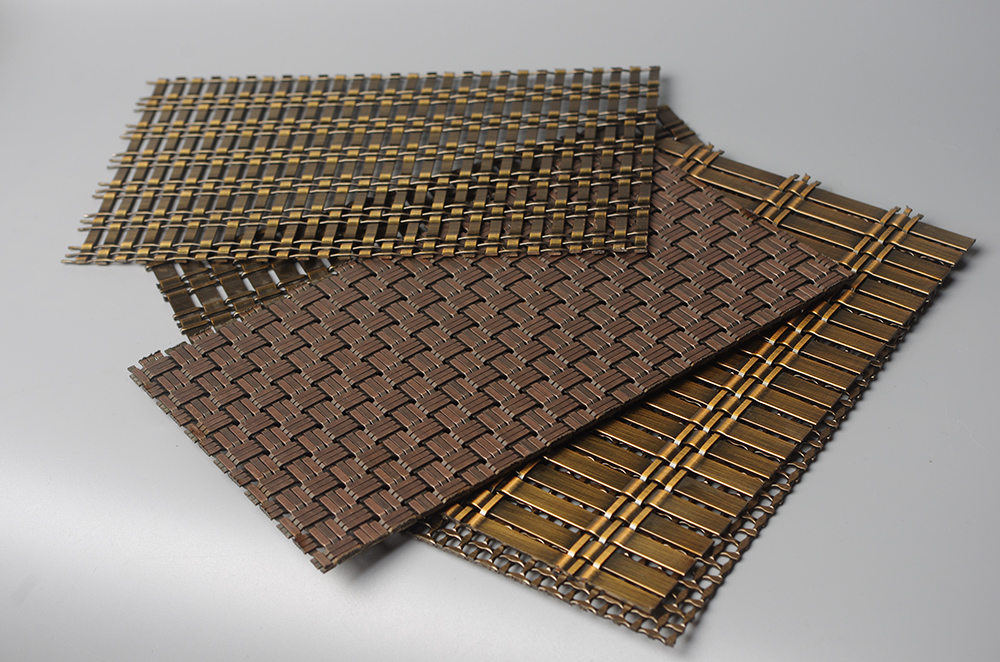
What is Architectural Woven Wire Mesh?
Unlike standard welded wire or perforated sheet metal, architectural woven wire mesh is created by mechanically interlacing individual metallic wires. This process results in a “fabric” of metal that is both incredibly strong and surprisingly flexible.
Commonly referred to as architectural mesh, metal fabric, or wire cloth, this material is defined by its high stability and the relationship between warp (lengthwise) and weft (crosswise) wires .
The Precision Manufacturing Process
Understanding how the mesh is made is crucial for appreciating its value. High-quality architectural mesh is produced on specialized weaving looms, similar to textile weaving but using high-tensile metal wires .
The Terminology:
- Warp Wires: The longitudinal wires held under tension on the loom.
- Weft (Shute) Wires: The wires woven horizontally across the width.
- The Loom: Advanced machinery (often using rapier technology) interlaces these wires. A two-heddle frame system lifts one set of wires while another pushes down, allowing the weft wire to pass through .
Pre-Crimping: Before weaving, wires are often pre-crimped (shaped) to lock them in place. This ensures the mesh holds its pattern perfectly under tension, creating rigid intersections without welding .
5 Key Applications in Modern Architecture
Architectural woven wire mesh is being specified for a wide range of uses because it manages light, provides security, and adds texture.
1. Building Facades and Cladding (The Second Skin)
Mesh facades act as a “second skin,” reducing solar heat gain while maintaining visibility and airflow. As sunlight shifts, the mesh creates dynamic shadow patterns, bringing the building to life.
Pro Tip: For exteriors, Corten steel mesh offers a weathering, low-maintenance finish, while T316L stainless steel provides maximum corrosion resistance in coastal environments .
2. Sun Control & Rainscreens
Architects are using mesh to meet strict energy codes. As a sunscreen, it blocks UV rays before they hit the glass.
Case Study: The Fred Rogers Center utilized a triple-shute weave (M13Z-345) that acts as a safety railing on the mezzanine and a light-diffusing shade for the classrooms below, helping the project achieve LEED Gold certification .
3. Interior Partitions & Room Dividers
Unlike drywall, woven wire partitions divide space while allowing light and HVAC airflow to pass through. This creates privacy without the “closed-off” feeling.
- Open Weaves: Allow visibility for office spaces.
- Tight Weaves: Offer privacy for hospitality venues or healthcare .
4. Security & Balustrades
Mesh provides fall protection for balconies and staircases without obstructing views. It meets safety codes (e.g., 4″ sphere rule) while remaining visually lightweight. Unique “lock crimp” weaves offer high rigidity for high-traffic public areas .
5. Interior Design & Ceilings
Inside a building, mesh adds texture and warmth. Designers are using copper and brass alloys in elevator cabs (like the METART-WW35 pattern for 100% privacy/zero opening) and restaurant ceilings to add elegance and hide mechanical systems .
Choosing the Right Material: Options & Finishes
The “look” of architectural mesh goes far beyond just the pattern.
Alloys:
- Stainless Steel (304/316): The standard for strength, hygiene, and modern aesthetics.
- Bronze, Brass, & Copper: Develops a natural patina over time, adding warmth and “living finish” character .
- Plain Steel: Often powder-coated for specific color matches (RAL colors) .
Finishes:
To achieve color uniformity or specific hues, secondary finishes are applied. These include:
- Plating: Antique Brass, Bright Copper, Satin Nickel, or Champagne Bronze.
- Powder Coating: For a durable, colored finish.
- PVDF (Paint): For exterior-grade color retention .
Customization Note: Many suppliers allow you to mix alloys. For example, using a stainless steel warp with a bronze weft creates a striking two-tone visual effect .
Why Specifiers Trust Woven Mesh
- LEED & Sustainability: Metal mesh is 100% recyclable. As a sunshade, it reduces building energy consumption. It is durable, lasting for decades without replacement (Seagram Building installation, 1958) .
- Structural Engineering: Mesh systems are often tensioned between frames, allowing them to withstand high wind loads without permanent deformation .
- Cost-Effectiveness: For applications like railing infill or parking garages, mesh is often less expensive than architectural glass or intricate metal panels .
Conclusion
Architectural woven wire mesh is more than a building material; it is a design tool that balances transparency and protection.
Key Takeaways for Your Next Project:
- Define the Goal: Is it for sun shading (high open area), privacy (low open area), or safety (high rigidity)?
- Select the Alloy: Stainless for longevity, Copper/Brass for aesthetic warmth.
- Review the Specs: Check the Percent Open Area (POA) and Wire Diameter—these dictate both the look and the structural calculation.
From the lobby ceiling to the exterior facade, woven wire mesh offers a texture and performance that sheet goods simply cannot match.